
Platinum or White Gold? A Practical Guide to Finish and Care
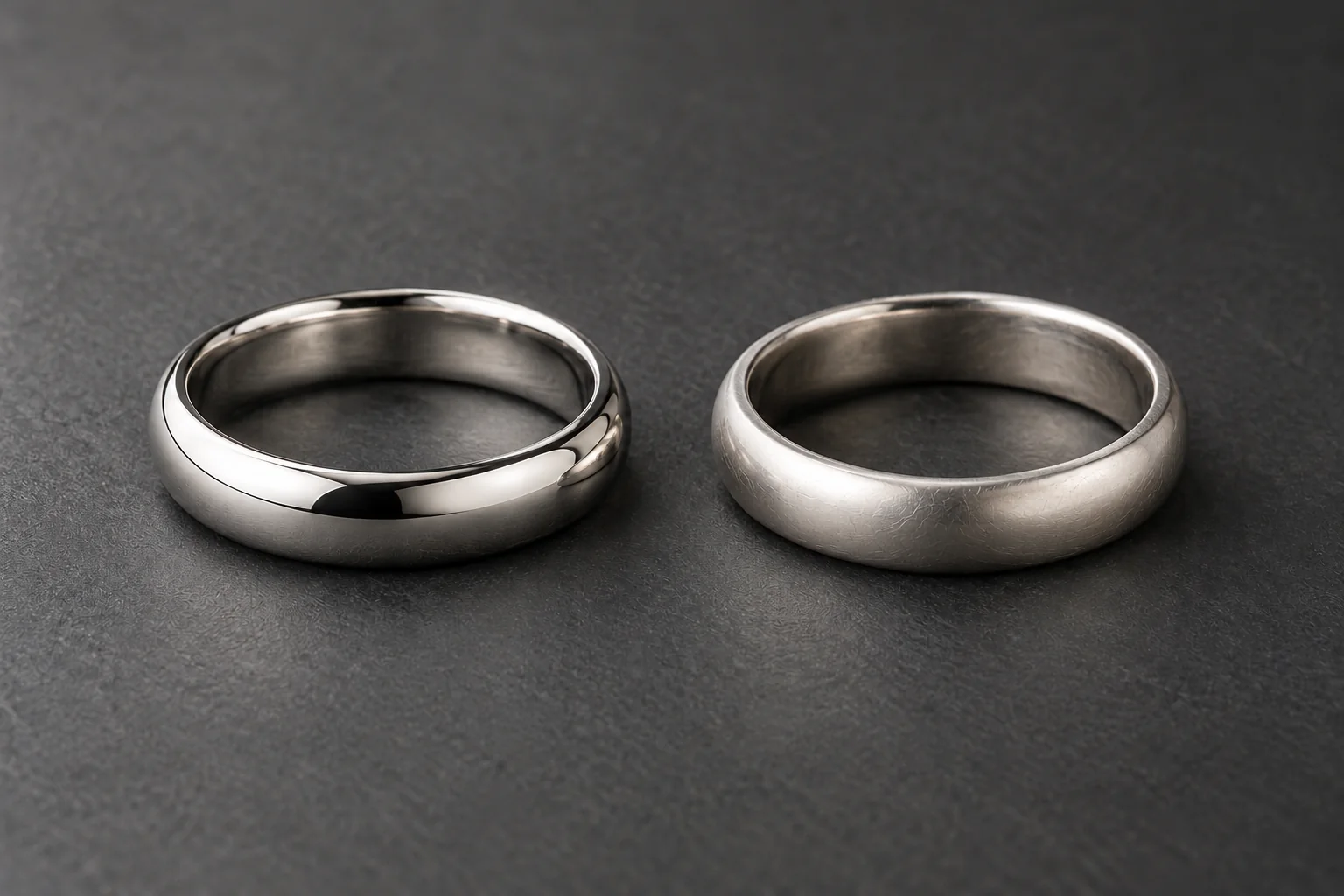
Platinum and white gold can look similar when freshly polished. The more useful comparison is what each piece is made from, whether it has a surface coating, and how you would like it to look after years of use.
Both can be used in fine jewellery. Choosing between them is easier when you compare actual specifications and care requirements instead of assuming that one metal is always the better option.
Start with the underlying material
White gold is a gold alloy made with whitening metals, such as palladium or nickel. Many pieces receive a rhodium coating for a brighter white finish. Platinum is a different precious metal with a naturally greyish-white colour, and jewellery makers also alloy it to obtain suitable working properties. GIA describes these materials in its guide to choosing an engagement-ring metal.
Ask for the full description rather than relying on the word “white”. An 18K white-gold item contains 75% gold. A platinum item described as Pt950 contains 950 parts platinum per thousand, or 95%. These numbers describe different metals, so they should not be read as a single quality score.
Record the remaining alloy ingredients when they matter to your choice. A metal name or fineness number does not, by itself, supply the full recipe.
Separate natural colour from surface finish
The bright appearance of rhodium-plated white gold includes a coating that can wear. As that happens, the colour of the underlying alloy may become more noticeable. Ask to see an unplated sample of the same alloy if understanding that change is important to you.
Platinum does not need rhodium to be a white metal. However, GIA notes that some manufacturers do rhodium-plate platinum jewellery, so it is worth asking about the actual finish on either option. Its everyday ring-material guide also describes platinum’s substantial weight and the patina that can develop with wear.
Try on pieces with comparable dimensions. Notice the weight, profile and contact with neighbouring fingers. A photograph cannot tell you whether a broad band feels comfortable during ordinary hand movements.
Decide how you feel about patina
Platinum jewellery can develop a softer-looking surface known as patina. Some owners enjoy that worn finish; others prefer a high polish. Platinum Guild International’s care guide explains that a jeweller can polish the surface and should also check the setting.
Before purchase, ask to see examples of a similar design after use. Discuss what routine cleaning will achieve and what would require professional refinishing. Keeping a ring clean and restoring a mirror-like finish are different maintenance jobs.
For white gold, ask how replating is handled, whether preparation or repairs are included, and how long the jeweller would need the piece. Avoid building your decision around a fixed replating interval: get advice for the particular item and the way you expect to wear it.
Consider the complete piece
A ring includes more than its principal metal. Ask about the band dimensions, settings, soldered joins and any decorative coatings. If you have a known sensitivity to a particular metal, request a specific alloy description instead of relying only on broad comfort claims.
Include future alterations in the discussion. Can that design be resized? Would engraving or a patterned finish be affected? Who would carry out a repair? Ask the jeweller to explain the options for the finished item before you commit, especially for complex or mixed-metal designs.
Use a care routine suited to the stones and setting
Cleaning advice must account for the whole piece. GIA’s jewellery-cleaning guide warns against abrasive products and explains that even gentle cleaning methods have exceptions for certain gems and treatments. Get instructions that name the materials in your item.
Do not assume that an ultrasonic or steam cleaner is suitable because the metal itself is durable. GIA’s ultrasonic-cleaner guidance highlights risks for some stones, treatments and settings. If you notice a loose stone, damaged prong or snagging edge, stop wearing the piece until a jeweller checks it.
Compare the whole ownership plan
Request itemised quotations for comparable pieces, including fineness, weight, dimensions, workmanship and finish. Ask separately about the cost and availability of inspections, refinishing, replating and resizing. Those details make the comparison more useful than a metal-price headline.
The best fit is the piece whose appearance, feel and care requirements suit you. For an overview of the wider metal categories, explore the Jawharat Al Khalij metals catalogue.