
Copper, Brass and Bronze Jewellery: Materials, Disclosure and Care
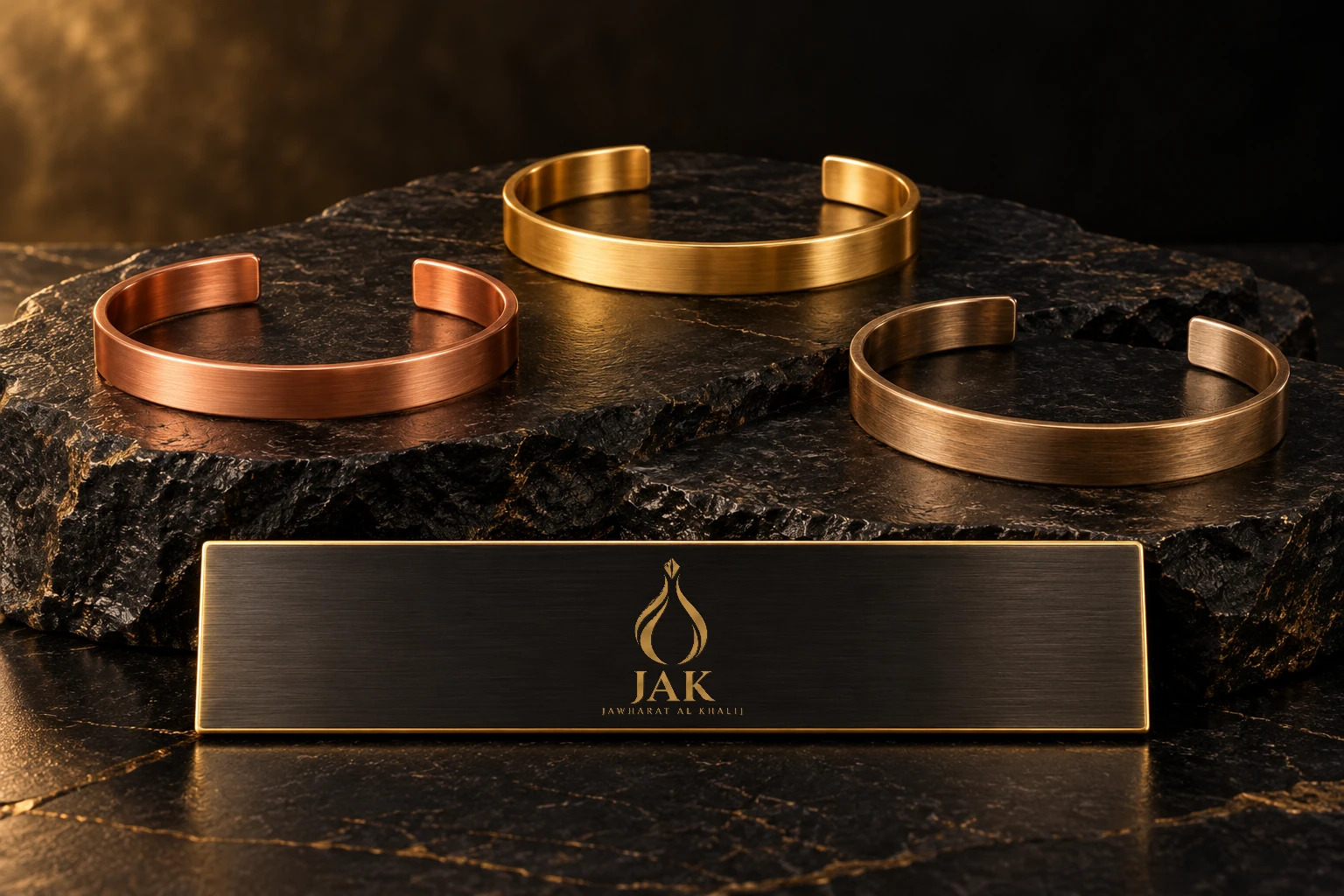
Copper, brass and bronze can all produce attractive jewellery, but they are not interchangeable descriptions. Their colour may overlap, their surfaces may be plated or deliberately darkened, and familiar trade names do not always reveal the alloy beneath the finish.
A useful purchase description separates three things: the underlying material, the surface treatment and the components that contact your skin. That information is more helpful than choosing by colour alone.
Copper, brass and bronze: the starting distinction
Copper is a metallic element. Clean, exposed copper has a characteristic reddish appearance. Brass is a family of copper–zinc alloys; its shade can range from reddish tones to yellow as composition changes. Traditional tin bronze combines copper with tin, but the wider bronze family also includes alloys such as aluminium bronze and silicon bronze.
Alloying and processing affect properties, so “bronze is stronger” or “copper is softer” is not a complete buying specification. A thin, heavily worked component and a thick casting cannot be compared from their metal names alone. The Copper Development Association describes the composition-based alloy families and their different working characteristics. CDA: The Copper Advantage.
For jewellery, ask how the design handles daily use: whether a cuff is intended to be adjusted repeatedly, how a clasp is constructed and whether an exposed finish will change over time. Those questions connect material choice to the piece you will actually wear.
“Jewellery bronze” may be a brass
One naming trap deserves particular attention. The Copper Development Association’s alloy register lists C22600, commonly called “Jewelry Bronze,” within the wrought brasses. Its principal constituents are copper and zinc. The word bronze in that commercial name does not establish a copper–tin composition. CDA: wrought brasses register.
This does not make the alloy unsuitable or the traditional name inherently misleading. It means the name needs context. Ask for the alloy designation or a clear composition description when the distinction matters to your purchase.
Similarly, “bronze finish” describes an appearance unless the seller expressly identifies the underlying material. A photograph of a warm brown pendant cannot establish whether it is bronze, brass, plated metal or a surface-treated combination.
Separate the base metal from the coating
A brass component can have a gold-coloured surface without being solid gold. A coating, lacquer or intentional patina may determine both its initial appearance and the care it needs.
Before buying, request a written description that answers:
- What is the main body made from?
- Is the surface bare, plated, lacquered or intentionally patinated?
- Are the clasp, ear wires, posts and other fittings made from the same material?
- Is there information supporting any nickel-free claim?
- What cleaning method is suitable for the complete item?
For the distinction between precious-metal construction and surface layers, our solid gold, gold-filled and gold-plated jewellery guide explains the terminology. Keep the product description with your receipt so future cleaning or repair starts with the same information.
Colour change does not tell the whole story
Copper alloys can develop natural or intentional surface layers in several colours. The Canadian Conservation Institute notes that stable patinas are generally smooth, adherent and coherent. Loose or powdery corrosion calls for a different response from an intact decorative finish. Colour alone is insufficient to decide that every green area should be scrubbed away. CCI: caring for metal objects.
If the surface is flaking, producing powder or changing rapidly, stop experimenting with cleaners and ask a knowledgeable jeweller or conservator to inspect it. An antique or deliberately patinated piece deserves particular caution because its surface may be part of its value.
Skin comfort is a separate issue. Nickel in jewellery is a recognised cause of allergic contact dermatitis, and components such as earring backs can matter as much as the main ornament. Stop wearing a piece that causes a rash and seek appropriate medical advice if symptoms persist or recur. The alloy family name alone is not a personalised skin-safety guarantee. American Academy of Dermatology: nickel allergy.
Clean gently and preserve the intended finish
Start with the maker’s instructions and the least aggressive suitable method. A clean, soft cloth is a sensible first step for ordinary surface dust. Do not assume that a recipe for bare copper cookware suits jewellery with plating, stones, adhesive or lacquer.
Cleaning and polishing are different: polishing removes some surface material along with tarnish. Repeated polishing can reduce detail, and it can disturb an intentional finish. CCI recommends establishing the intended appearance before choosing treatment. CCI: cleaning and polishing brass and copper.
Avoid improvised acid dips, abrasive pastes and vigorous rubbing on an unidentified finish. If wet cleaning is recommended, confirm that every component can tolerate it. Gemstones and their treatments may impose limits that the metal itself does not. Ultrasonic cleaning is also unsuitable for some gems and assemblies. GIA: caring for jewellery.
Store pieces separately to reduce scratching, and follow any material-specific storage instructions. The best choice among copper, brass and bronze is the one whose composition, finish and maintenance match your expectations. Clear disclosure makes that choice much easier than a colour label does.