
Solid Gold, Gold-Filled and Gold-Plated Jewellery Explained
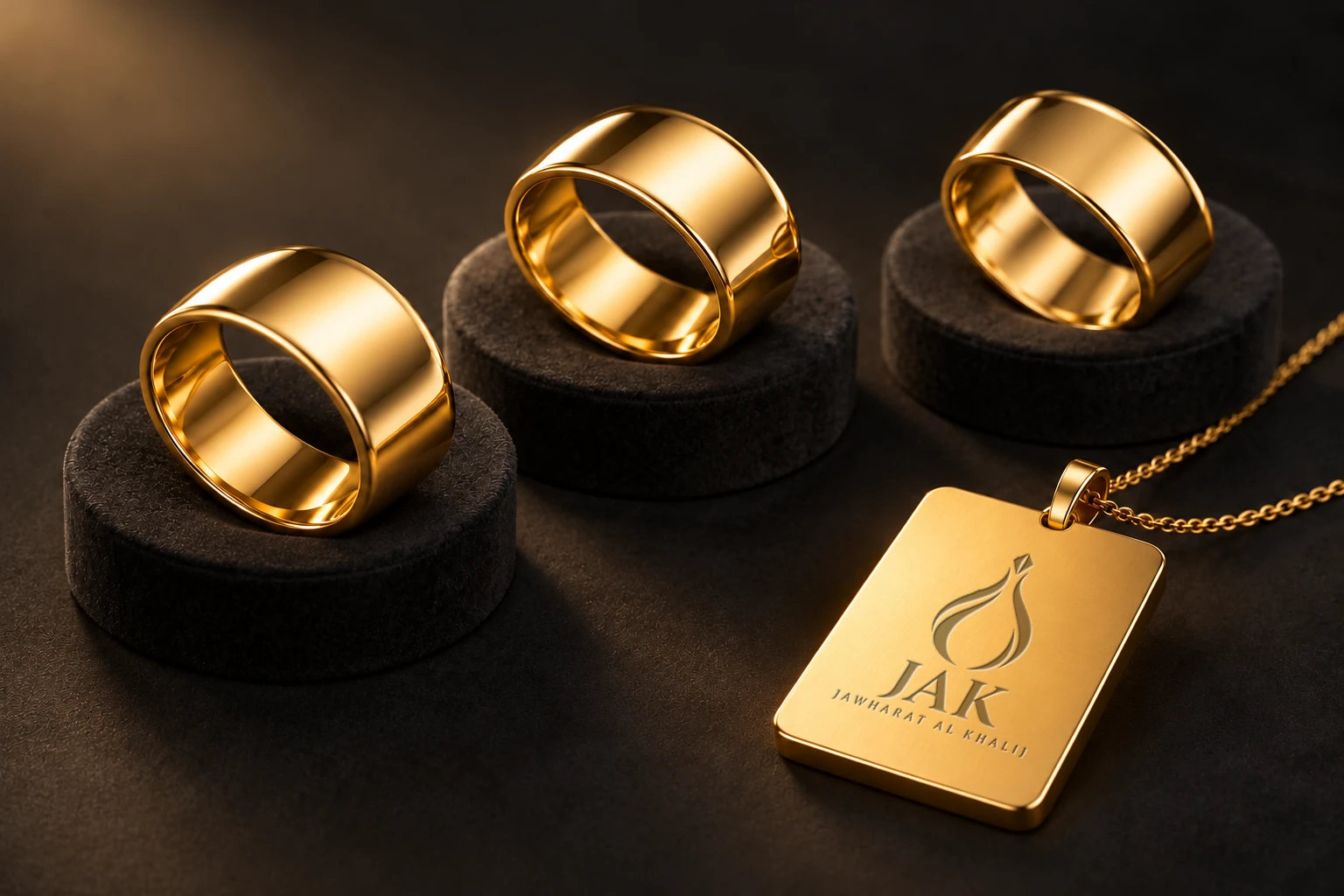
Two pieces of gold-coloured jewellery can look similar while containing very different amounts of gold. The useful distinction is how the object is built: gold alloy throughout its metal body, a mechanically bonded gold-alloy layer over another metal, or an applied surface coating.
Before comparing prices, ask for a complete material description. The word “gold” and a karat number are only part of the information you need when a product also has layers or a hollow interior.
Start with the meaning of solid gold
In a comparison with coated jewellery, buyers often use “solid gold” to mean a body made of gold alloy throughout. However, construction also matters: the US Federal Trade Commission’s consumer buying guide uses “solid gold” for an item that is not hollow. Ask separately whether the metal is gold alloy throughout and whether its construction is hollow or non-hollow.
Solid gold does not automatically mean 24-karat gold. As GIA explains, an 18-karat alloy contains 18 parts gold out of 24, with other metals making up the balance. The karat describes the alloy’s composition. Our guide to gold colour and karat explains that separate choice in more detail.
Gold-filled describes bonded layers
Gold-filled material has a layer of karat gold mechanically bonded to a different metal. Rio Grande’s guide to gold-filled materials describes heat and pressure bonding to a core such as brass. The name can be confusing: it does not describe a piece whose interior is filled with pure gold.
A common marking is “1/20 14K GF”. Read its elements together: the fraction refers to the weight share of the karat-gold layer, 14K describes that layer’s fineness, and GF identifies gold-filled construction.
For US terminology, the FTC’s Jewelry Guides, section 23.3 give a gold-filled example using a mechanically applied layer of at least 10-karat gold that makes up at least one-twentieth of the article’s metal weight, with coverage and durability conditions. This is a US reference, rather than a universal rule for every sales market.
Crucially, a 5% layer of 14-karat gold alloy is not the same as 5% pure gold. In a simplified metal-only example, 5% multiplied by 14/24 is about 2.92%. This arithmetic explains the label; it is not an assay result or a valuation of a finished item.
Gold-plated jewellery has a surface coating
Gold-plated jewellery carries gold or gold alloy on its surface, commonly applied by electroplating. The underlying material may differ between products. Ask what it is rather than assuming that every plated piece uses the same core.
The FTC notes that plating wears away with use and that its thickness affects wear. A higher-karat coating still remains a coating; “18K gold-plated” does not describe an 18-karat body. Ask for the coating’s stated thickness, if available, and the seller’s care instructions. No single lifespan can be inferred from the words “gold-plated”.
Think about wear and future work
Consider where the piece will rub, what it will touch and how often you plan to wear it. Those questions are more useful than a promise that a material will last a fixed number of years. A ring worn while working with the hands and a pendant worn occasionally have different use patterns.
Ask a jeweller how repairs would be handled before paying for a piece you expect to keep for a long time. For layered materials, cutting, filing or polishing can expose the underlying metal. Rio Grande also explains that gold-filled sheet may be single-clad or double-clad, which changes where its gold layers sit. The construction of the individual component matters.
Request a clear answer on whether refinishing or replating is available, what it would involve and whether any parts would need replacing. Treat that as a service question, rather than assuming the purchase includes future maintenance.
Compare complete descriptions
Put competing quotations side by side using the same headings: body material, karat, layer information, dimensions, weight, construction and aftercare. Keep any stones or non-metal components separate in the description. A price divided by total grams does not make products with different materials directly comparable.
For several pieces or a production order, use our wholesale jewellery specification checklist to request consistent answers from each supplier.
Questions worth asking
- Is the body gold alloy throughout, gold-filled or gold-plated?
- Which layer or component does the stated karat describe?
- What is the underlying metal and, where relevant, the layer weight or thickness?
- Is the piece hollow or non-hollow?
- What wear, repair and return terms are provided in writing?
Choose with the full description in view. Clear materials, realistic wear expectations and suitable aftercare make a more useful comparison than colour alone.