
Hollow vs Solid Gold Chains: Construction, Weight and Wear
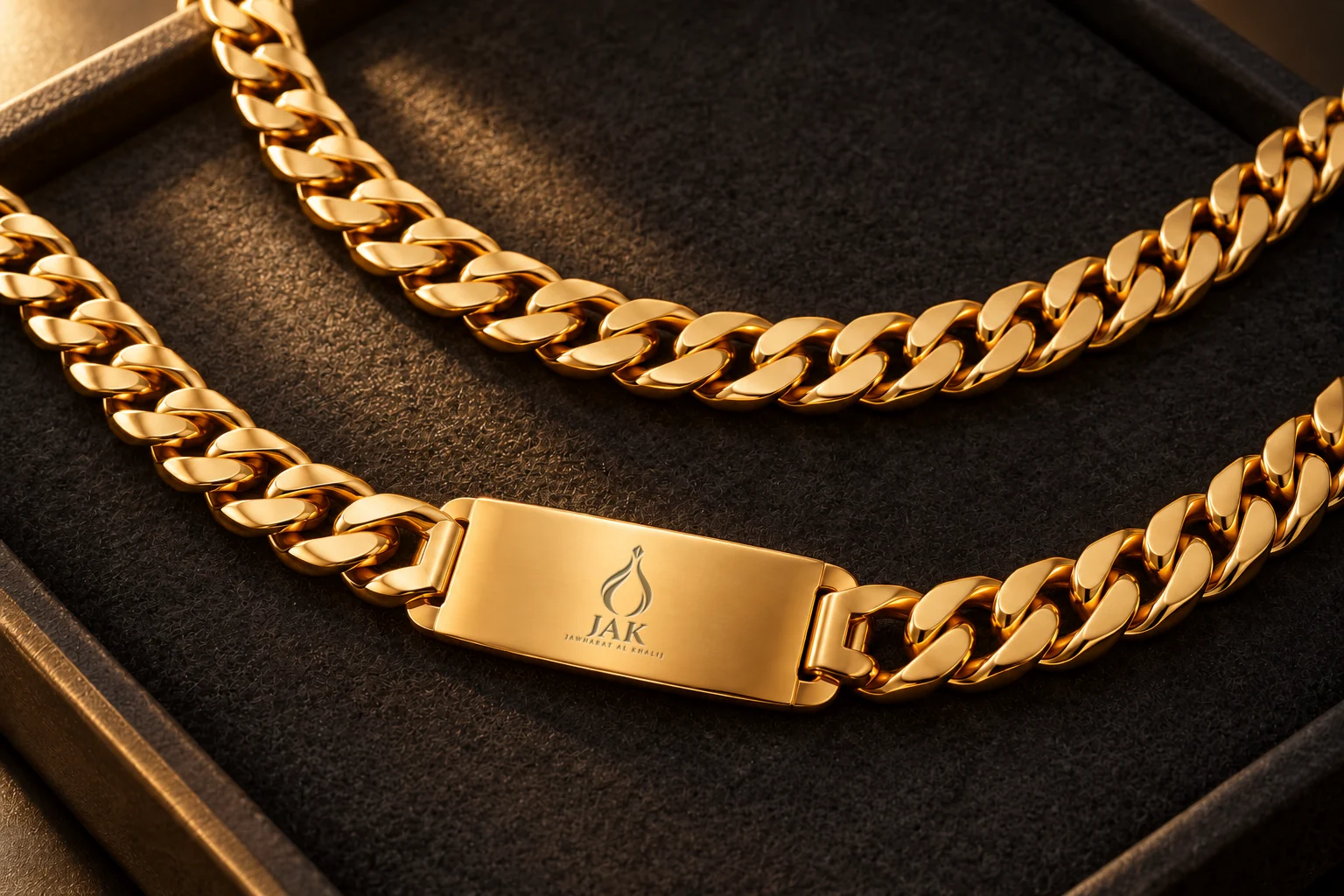
Two gold chains can have the same length, similar-looking links and the same stated karat, yet feel very different in the hand. One reason is construction. A hollow link encloses an empty space; a solid link uses metal through its cross-section.
That distinction affects how much metal is present and what questions to ask about handling and repair. It deserves its own place on a quotation, alongside karat, length, width and weight.
Hollow describes shape, not gold purity
A hollow chain can be made from genuine karat-gold alloy. For example, “18K” describes the composition of that alloy, while “hollow” describes the interior of the link material. The empty space has no effect on the alloy’s gold percentage, although it reduces the amount of metal needed for a given outer form.
Gold-filled and gold-plated are different descriptions: they concern a gold-bearing layer over another material. Do not treat them as synonyms for hollow construction.
Language should be explicit. The US FTC’s Jewelry Guides distinguish hollow gold-alloy articles from products described as solid and recommend clear disclosure of the hollow interior. For any market, ask the seller to state composition and construction separately rather than relying on a short product title.
How hollow links are made
One manufacturing route forms metal strip into tubing, which is shaped into links. A temporary core can support the tube during forming and is subsequently removed. Other hollow jewellery can be made using different processes, so the exact method should come from the manufacturer.
Peter Raw’s technical paper on hollow carat-gold jewellery explains the use of strip and tube and why wall thickness and well-made joins matter. An assay addresses composition; it does not replace manufacturing quality checks on the links.
For a buyer, the practical implication is straightforward: a large-looking link does not reveal the thickness of its walls or the quality of its joins.
Compare dimensions and weight together
Start with chains of the same stated karat, length and broadly comparable design. Record width, actual weight and construction. A photograph or width measurement alone cannot show how much metal is present inside a link.
Consider a purely illustrative comparison: two chains have the same length and width, but one is listed at 8 grams and the other at 15 grams. The lighter chain may use hollow construction, a different link profile or another design choice. The weight difference is a reason to ask for details, rather than proof of a particular construction.
When buying remotely, request confirmation that the quoted weight applies to the offered size. Ask whether it is an actual item weight or an estimate and whether the clasp is included. These details make the comparison easier to repeat if a different length or clasp is proposed later.
Think about the way the chain will be worn
Hollow construction can provide a substantial visual appearance with less weight. The trade-off is that thin-walled links can be vulnerable to dents or deformation under rough handling. Jewellery manufacturer Stuller discusses this handling concern in its guide to gold-chain types.
A solid construction label still cannot guarantee a chain’s suitability for every use. Link design, dimensions, joins and the clasp all deserve inspection. Ask the jeweller to assess the complete item for your intended wear.
If a pendant will be added, take it to the consultation or provide its dimensions and weight. Ask whether the chain, clasp and connecting parts suit that exact combination. Avoid choosing a pendant purely because its opening happens to fit over the chain end.
Repairability is a question for the particular chain
A hollow chain is not automatically beyond repair. Bench jeweller Chuck Kohler’s hollow rope-chain repair example demonstrates a successful repair while also showing the problems left by earlier work. That is evidence that skilled repair can be possible, not a guarantee for every damaged design.
Before buying, ask who will assess future damage and whether the seller’s workshop works on that construction. If you are considering a previously owned chain, request disclosure of repairs and let a jeweller inspect stiff areas, distorted links and the clasp.
Ask whether a repair might shorten the chain or leave a visible change. Obtain an assessment before approving work rather than assuming that every repair will preserve the original appearance.
A concise buying checklist
- What karat is the chain, and are its links hollow or solid?
- What are the length, width and actual weight of this exact item?
- Is the clasp included in that weight and made from the stated material?
- Is it suitable for my wear pattern and intended pendant?
- What repair support and written return terms are available?
For documenting a purchase or wholesale enquiry, see our jewellery specification checklist. For the separate question of metal-composition evidence, read our hallmark and assay-report guide.
Choose the combination of feel, construction and serviceability that fits your needs. The most informative comparison brings the chain’s external dimensions and its internal construction into the same conversation.